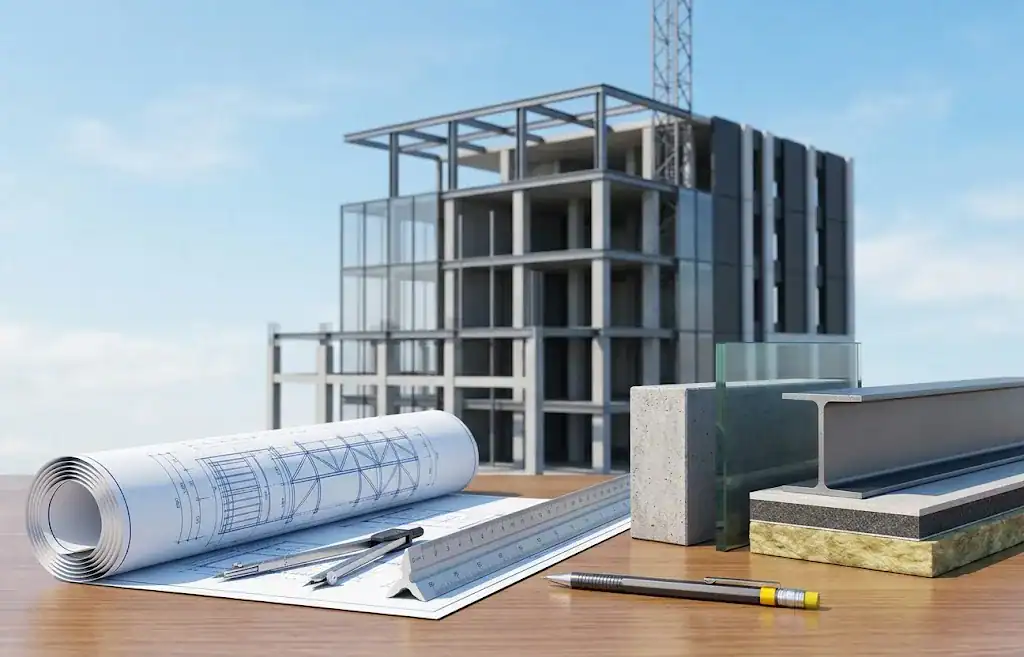
Value engineering in construction is a structured way to improve how a project uses its budget without automatically sacrificing quality. It involves reviewing the design, materials, construction methods, scope, and costs to determine whether the same goal can be achieved more efficiently.
That sounds simple, but good value engineering requires more than finding cheaper products.
At Spiegel Wellman Contractors, we look at how a proposed change affects the entire project. A lower-priced material may require more labor. A simplified architectural detail may reduce both material and installation costs. An expensive feature may be worth keeping because it is central to the homeowner’s priorities.
For homeowners planning construction or remodeling in Beverly Hills, these decisions can become especially important when a project includes custom design, structural changes, premium finishes, extensive engineering, or complex construction details.
Key Takeaways
- Value engineering compares cost with function, quality, design intent, and constructability rather than simply choosing the cheapest option.
- The process is most useful during design and preconstruction, while changes are easier to evaluate and implement.
- Materials are only one part of the review; labor, structural systems, project scope, sequencing, and construction methods can also affect value.
- A lower upfront cost is not always a true savings if it creates more labor, maintenance, delays, or replacement costs.
- Good value engineering protects the homeowner’s high-priority features while looking for unnecessary costs elsewhere.
- Detailed estimating makes value engineering more useful because it shows where the project’s major costs are actually coming from.
How Does Value Engineering Work in Construction?
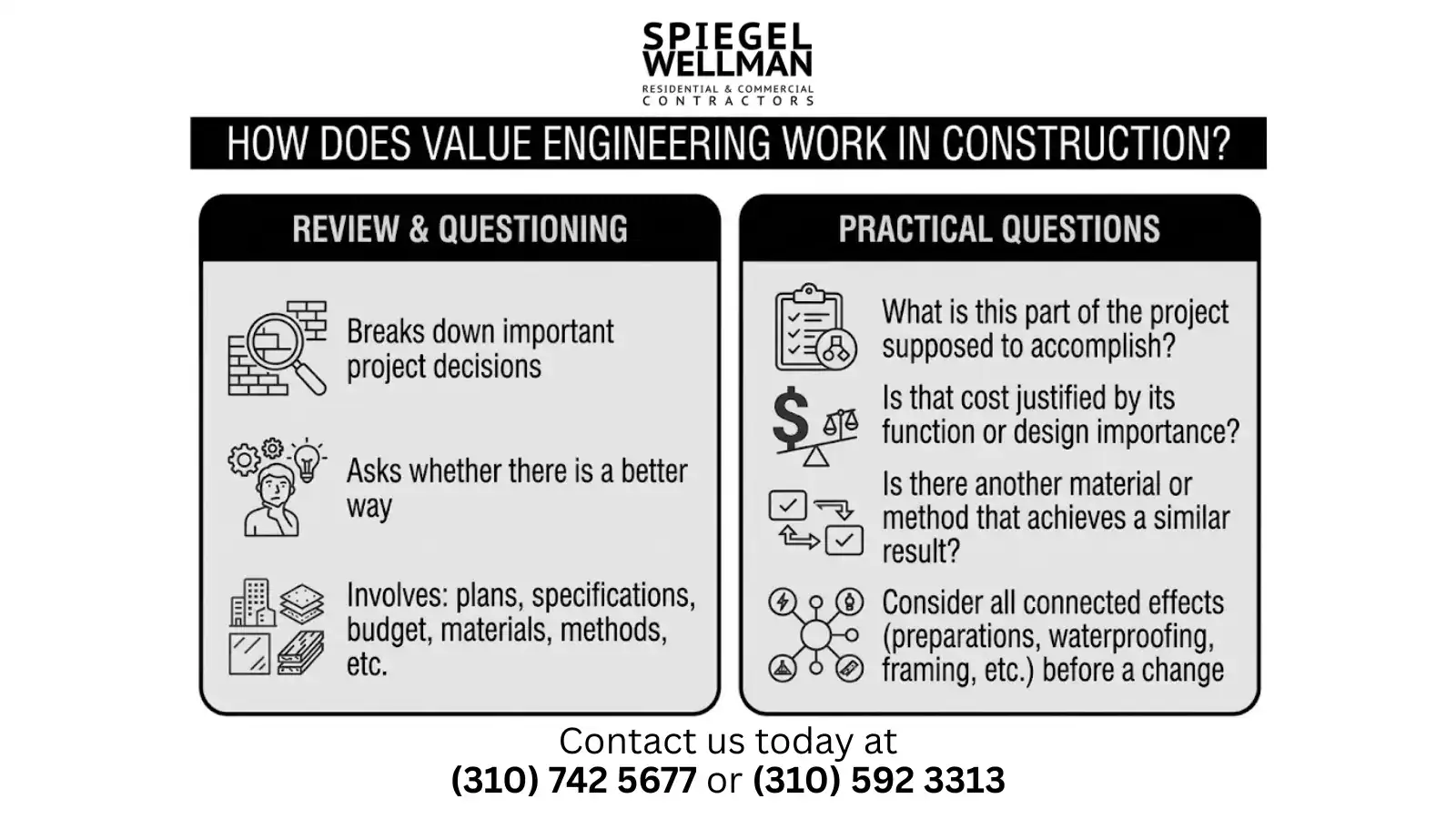
Value engineering works by breaking down important project decisions and asking whether there is a better way to achieve the required result.
That review may involve the plans, specifications, budget, material selections, structural design, contractor proposals, and construction methods.
The basic questions are practical:
- What is this part of the project supposed to accomplish?
- What does it cost?
- Is that cost justified by its function or design importance?
- Is there another material or method that achieves a similar result?
- What would change if we choose the alternative?
- Could the proposed savings create costs elsewhere?
The last question matters more than many homeowners realize.
A construction decision rarely exists in isolation. Changing one material can affect preparation, waterproofing, framing, fastening, finishes, or installation time. Moving a wall could affect electrical work, plumbing, structural engineering, cabinetry, and flooring.
Good value engineering follows those connections before recommending a change.
Call (310) 742-5677 to discuss your project
Value Engineering Is Not the Same as Cost Cutting
The biggest difference is the goal.
Cost cutting asks, “How can we spend less?”
Value engineering asks, “How can we use the budget more effectively?”
Those questions sometimes lead to the same decision, but not always.
Suppose a less expensive exterior finish saves money on the material itself but requires additional substrate preparation and considerably more installation labor. Once the complete cost is calculated, the cheaper product may provide little actual savings.
Another material might cost slightly more upfront but install faster and require less maintenance.
Value engineering looks beyond the purchase price.
Quality Still Matters
A project should not be value-engineered by blindly replacing every high-cost component.
We consider what the homeowner actually values.
If a particular window system, kitchen layout, architectural feature, or finish is one of the main reasons for the project, removing it simply because it appears expensive may be the wrong decision.
Instead, there may be less important areas where the budget can be adjusted with little effect on the finished home.
That is a better use of value engineering.
When Should Value Engineering Begin?
Value engineering is usually most effective during design and preconstruction.
At that point, the team can still adjust details, compare materials, review structural solutions, refine the scope, and make changes before work has been installed.
A revision on a drawing is generally easier to manage than a change after construction has begun.
During Early Design
Early value engineering can help keep the developing plans connected to the intended construction budget.
Design decisions often have cost consequences that are not immediately obvious.
A complicated roofline, large structural opening, custom architectural detail, unusual material, or major relocation of plumbing can affect more than one trade.
Identifying those effects early gives the homeowner more choices.
During Estimating
Once the project can be priced in greater detail, value engineering becomes more specific.
The estimate can reveal which parts of the project are driving the budget.
Instead of making random cuts, the team can focus on areas where changes are most likely to matter.
Before Construction
Preconstruction provides another opportunity to review final materials, trade pricing, construction methods, and scope.
At this stage, value engineering can help resolve remaining budget concerns before contracts, purchases, and field work make revisions more difficult.
After Construction Begins
Value engineering can still happen during construction, but the available choices may be narrower.
Materials may already have been ordered. Work may already be installed. Permits and approved plans may depend on the existing design.
A change that would have been easy three months earlier may now require demolition, revised drawings, added labor, or schedule adjustments.
That is why early review usually creates more flexibility.
What Parts of a Construction Project Can Be Value-Engineered?
Almost any significant project component can be reviewed, but that does not mean every item should be changed.
The best opportunities depend on the design and budget.
Materials and Finishes
Materials are an obvious place to start because similar products can carry very different costs.
Value engineering may compare:
- flooring;
- stone and tile;
- cabinetry materials;
- plumbing fixtures;
- doors and windows;
- exterior finishes;
- roofing products;
- decorative details.
The goal is not automatically to downgrade them.
Sometimes a less expensive product provides the appearance and performance the homeowner wants without an unnecessary premium.
Other times, the premium product has characteristics that justify its cost.
Structural Design
Structural choices can have significant effects on a construction budget.
Large openings, long spans, cantilevers, extensive structural modifications, or complicated framing details may require more engineering, material, labor, and coordination.
When appropriate, the design and construction teams can review whether another approach achieves the intended space or appearance more efficiently.
Any change affecting structural performance still needs proper engineering and code compliance.
Architectural Details
A detail that looks simple on a rendering can sometimes be surprisingly labor-intensive in the field.
Custom transitions, recessed elements, unusual ceiling conditions, complicated exterior lines, or highly specialized installations can require additional framing, fabrication, waterproofing, finish work, or trade coordination.
That does not mean these details should be eliminated.
It means their cost should be understood before deciding whether they are worth keeping.
Project Scope
Sometimes the greatest opportunity comes from reviewing the scope itself.
A homeowner may discover that one part of the proposed work contributes little to the overall goal but carries a substantial cost.
Removing, reducing, or postponing that portion of the work could allow the budget to remain focused on higher-priority areas.
Construction Methods
Two methods can sometimes produce a comparable result while requiring different amounts of labor, equipment, or specialized work.
Experienced construction input is useful here because savings that appear obvious on paper may not hold up once field conditions are considered.
How Does Estimating Support Value Engineering?
Estimating shows where the money is going. Value engineering determines whether that money is being used effectively.
Without a realistic estimate, value engineering can become guesswork.
Suppose the project is $150,000 above the intended budget. Simply choosing a cheaper faucet or changing a few light fixtures will not solve the real problem if most of the overage comes from structural work or an unusually expensive architectural feature.
A detailed estimate helps identify the major cost drivers.
From there, the project team can ask better questions.
Is there a different structural approach?
Can a complicated detail be simplified?
Is an expensive material essential?
Has the scope expanded beyond the original priorities?
Are allowances realistic?
Are there overlapping or unnecessary costs?
This is why estimating and value engineering work particularly well together.
What Makes a Good Value Engineering Recommendation?
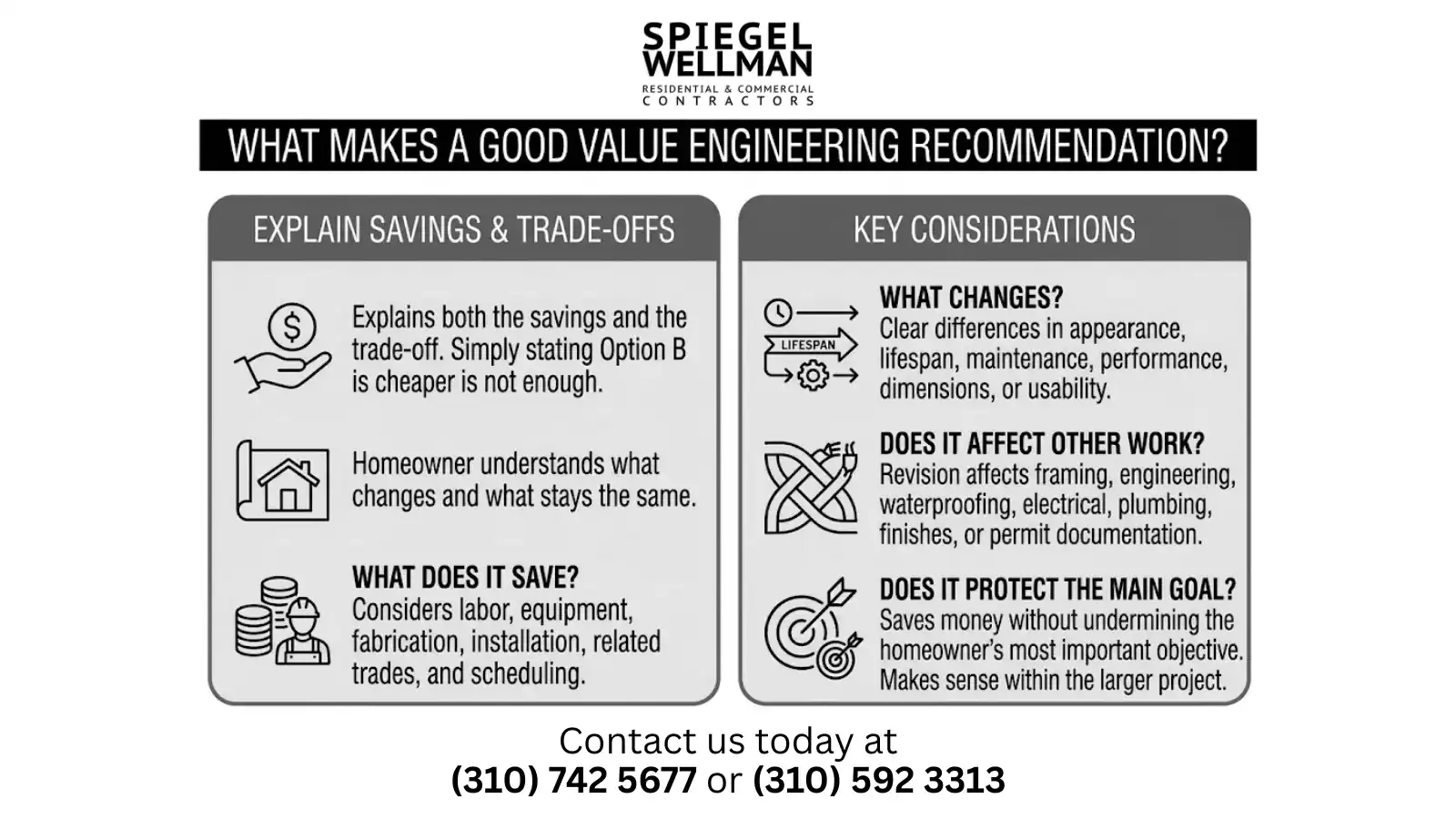
A good recommendation explains both the savings and the trade-off.
Simply stating that Option B is cheaper is not enough.
The homeowner should understand what changes and what stays the same.
For each significant recommendation, we want to know:
What Does It Save?
The comparison should consider more than material price.
Labor, equipment, fabrication, installation, related trades, and scheduling can all affect the actual savings.
What Changes?
Will the alternative change the appearance, lifespan, maintenance needs, performance, dimensions, or usability of the finished project?
Those differences need to be clear.
Does It Affect Other Work?
Construction systems are connected.
A revised material or detail may affect framing, engineering, waterproofing, electrical work, plumbing, finishes, or permit documentation.
Does It Protect the Main Goal?
A recommendation that saves money but undermines the homeowner’s most important objective is probably not good value engineering.
The right alternative should make sense within the larger project.
Call (310) 742-5677 to discuss your project
What Should You Avoid Value-Engineering Too Aggressively?
Some areas deserve greater caution because a poor substitution can create expensive or difficult problems later.
Examples may include structural components, waterproofing assemblies, critical building systems, code-required work, and details that strongly affect long-term durability.
This does not mean those areas can never be reviewed.
It means the decision should be based on performance and technical requirements rather than price alone.
A less expensive option is not useful if it introduces greater risk.
How Can Value Engineering Help a Beverly Hills Construction Project?
For a Beverly Hills custom home or major remodel, value engineering can help homeowners decide where premium spending creates a meaningful result and where it may not.
High-end construction often involves many interconnected choices. Custom architectural details, specialty finishes, large openings, structural modifications, cabinetry, stone, glazing, and mechanical systems can all influence the final budget.
The challenge is not simply making the project cheaper.
It is deciding where the budget deserves to remain high.
For example, one homeowner may place the greatest value on the kitchen, primary suite, and indoor-outdoor living areas. Another may prioritize architectural finishes or highly customized millwork.
Those priorities should influence where savings are considered.
A uniform approach rarely makes sense.
A Practical Example of Value Engineering
Consider a hypothetical project with an expensive custom wall finish specified throughout several areas of the home.
The first reaction might be to replace it with a cheaper product.
A proper value-engineering review goes further.
We would want to understand:
- how important the finish is to the overall design;
- whether it is needed in every specified location;
- what preparation the original finish requires;
- how much labor each option requires;
- whether another material creates a similar appearance;
- how the alternatives differ in durability and maintenance.
The best solution may be to keep the original material in high-visibility areas and use a simpler finish elsewhere.
That preserves an important part of the design while reducing cost where the difference matters less.
This type of decision is often more useful than applying a lower-cost option everywhere.
Can Value Engineering Improve the Schedule Too?
It can.
Certain value-engineering decisions may simplify construction, reduce specialized fabrication, limit difficult installation work, or avoid materials with challenging procurement requirements.
Those changes can sometimes make scheduling easier.
However, schedule effects must be evaluated alongside cost and quality.
A less expensive product with a long lead time may not be a better choice if it delays several trades.
Likewise, changing a design late in the project could slow the work even if the revised design costs less.
Value is therefore a combination of several factors, not just price.
What Is the Difference Between Value Engineering and a Cheaper Bid?
A cheaper construction bid tells you that one proposal has a lower total price. It does not automatically explain why.
Two contractors may have priced different scopes, allowances, specifications, or assumptions.
Before treating a low bid as better value, the proposals need to be compared carefully.
Questions include:
- Are both contractors pricing the same work?
- Are the material allowances comparable?
- Has either contractor excluded important work?
- Are major trades included?
- Are the plans being interpreted the same way?
- Are there vague allowances that could change later?
Value engineering requires understanding what the numbers represent, not simply choosing the smallest one.
Does Value Engineering Always Save Money?
No. A value-engineering review does not guarantee that every project contains large savings.
Sometimes the existing plans are already efficient.
Sometimes the homeowner’s priorities justify the current costs.
In other cases, the possible alternatives create trade-offs that are not worth accepting.
A useful review can still provide value because it confirms that the budget is being spent intentionally.
Knowing why a more expensive choice should remain can be just as important as finding something to reduce.
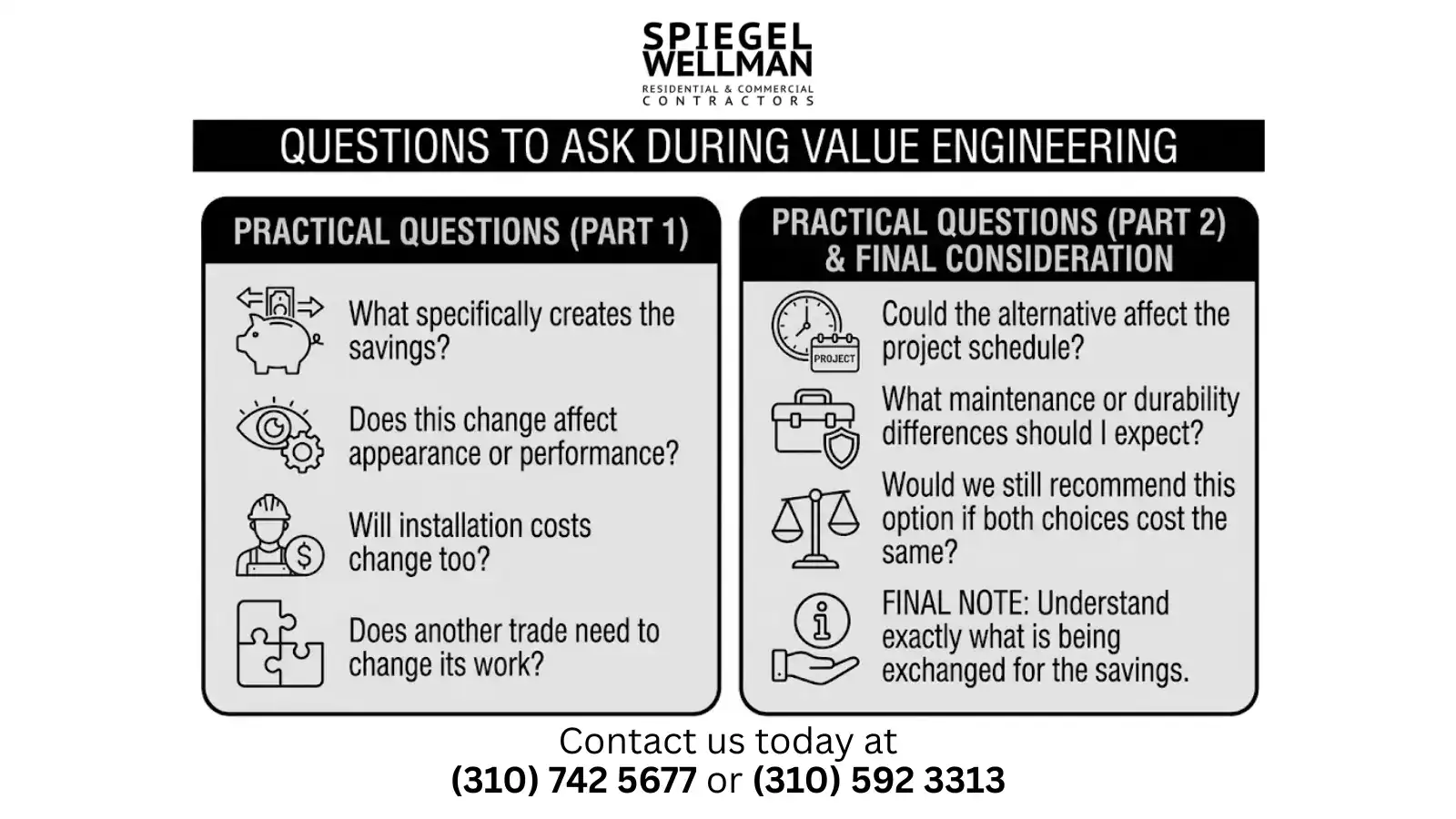
Questions to Ask During Value Engineering
Homeowners can make better decisions by asking practical questions instead of focusing only on the price difference.
Consider asking:
- What specifically creates the savings?
- Does this change affect appearance or performance?
- Will installation costs change too?
- Does another trade need to change its work?
- Could the alternative affect the project schedule?
- What maintenance or durability differences should I expect?
- Would we still recommend this option if both choices cost the same?
That final question is particularly useful.
If the only advantage of an alternative is price, the homeowner should understand exactly what is being exchanged for the savings.
Call (310) 742-5677 to discuss your project
Use Your Construction Budget Where It Matters Most
The purpose of value engineering is not to strip a project down until it reaches a lower number.
It is to make deliberate choices.
At Spiegel Wellman Contractors, we bring construction experience into estimating, design coordination, engineering, plans, permitting, and project execution. That allows us to consider how a proposed change will affect both the budget and the way the project is actually built.
For homeowners in Beverly Hills, value engineering can provide a clearer way to balance design goals with practical construction costs.
If you are planning a custom home, remodel, addition, or other construction project and want to discuss budgeting or value-engineering opportunities, call Spiegel Wellman Contractors at (310) 742-5677.
Frequently Asked Questions
Q: What is value engineering in construction?
A: Value engineering in construction is the process of reviewing a project’s design, materials, methods, scope, and costs to find ways to improve overall value. The objective is to use the budget more effectively while protecting important requirements such as quality, functionality, design intent, and constructability.
Q: Is value engineering just another term for cost cutting?
A: No. Cost cutting focuses mainly on reducing the amount spent. Value engineering considers what the project receives in return for that cost. A cheaper option may be rejected if it creates more labor, lower durability, additional maintenance, or an unacceptable change to the design.
Q: When is the best time to value-engineer a construction project?
A: Design and preconstruction are usually the best times because plans, materials, and construction details can still be changed more easily. Value engineering can also happen later, but options may become more limited once permits are approved, materials are ordered, or work has been installed.
Q: Can value engineering maintain high-end finishes?
A: Yes. Value engineering does not require removing premium finishes. A homeowner may choose to preserve high-priority finishes while looking for savings in areas that have less influence on the appearance, function, or overall goals of the project.
Q: How is value engineering different from construction estimating?
A: Construction estimating determines the anticipated cost of the proposed work. Value engineering uses that cost information to evaluate whether certain materials, details, methods, or portions of the scope could be handled more efficiently without undermining the project’s important objectives.
Q: Does value engineering always lower construction costs?
A: No. A review may identify meaningful savings, limited savings, or reasons to keep the original design. The amount depends on the project scope, materials, design complexity, construction stage, engineering requirements, and homeowner priorities.
Q: Does Spiegel Wellman Contractors provide value engineering for Beverly Hills projects?
A: Yes. We incorporate value-engineering considerations into construction estimating, design and preconstruction planning for appropriate projects. We review potential alternatives in relation to cost, quality, buildability, design intent, and the owner’s priorities.
Services We Also Serve